Event Schedule
March 24, 2026
1–4:30 p.m.
Melissa Warner Bow Grand Ballroom
John Gilbert Reese Center
March 24, 2026
1–4:30 p.m.
Melissa Warner Bow Grand Ballroom
John Gilbert Reese Center
Academic Enrichment Reflections
1:00 p.m. — Mikiah Fant
1:10 p.m. — Ilyas Nur
1:20 p.m. — Joshua McNichols
1:30 p.m. — Jordan Waid, Carly Williams and Vinny Tippett
1:40 p.m. — Sam Maokhamphiou
1:50 p.m. — Anna Mays
2:00 p.m. — Alexandra Miller
Completed Research and Creative Inquiry
2:15 p.m. — Sarah Ghiassi
2:30 p.m. — Brenden Justice
2:45 p.m. — Mitchell Mazzone
3:00 p.m. — Keiara Frank
3:15 p.m. — Karina Sanchez
Proposed Research
3:30 p.m. — Claire Gaulin
3:45 p.m. — Nadia Faqi
Completed Research
Proposed Research
Academic Reflections
Master of ceremonies:
Virginia Cope, PhD, associate dean, outreach and special programs
Judges:
Faculty: Terri Hessler, PhD
This paper looks at my experiences in France and Morocco and how they relate to Muslim culture, immigration, racism, feminism, and the law. By comparing both countries, I explore how Muslim identity is treated differently depending on whether Muslims are the majority or a minority, and how women experience inequality in different ways. In France, especially in Marseille, immigration from North Africa has played a huge role in shaping the culture of the city. Marseille is known as a main entry point for immigrants from countries like Morocco. Because of this, it has a large Muslim population. Even though France promotes equality and secularism, many Muslim immigrants and their children still face racism and discrimination. Muslim identity is often treated as something separate from "French" identity. Laws that ban hijabs in public schools and face coverings in public spaces are said to protect secularism, but they mainly impact Muslim women. These laws can make Muslim women feel targeted and excluded rather than included. In daily life, discrimination can also show up in job opportunities, housing, and how people are treated in public spaces. In Morocco, Islam is the main religion, so Muslim identity is not marginalized in the same way. However, women still face unfair treatment in many areas of life. Even though there have been legal reforms women still often deal with strong social expectations and traditional gender roles. Feminist movements in Morocco are pushing for better protections against violence, more equal rights in marriage and divorce, and more opportunities in education and work. While progress has been made, women can still experience pressure and limitations that affect their independence. In France, Muslim identity is often racialized and regulated by law, especially in immigrant communities like Marseille. In Morocco, the issue is less about religious identity and more about gender inequality within a Muslim-majority society. Looking at both countries helps show how law, culture, and identity are connected and how they shape people’s everyday experiences.
Advisor: Madeline Sharp
This project reflects on my study abroad experience through Ohio State’s Office of International Affairs program, Between France and Morocco: Diversity of the Francophone World. The program revolved around the course History 3089 (Colonialism in the Francophone World) and provided the opportunity to investigate the effects of colonialism on the ground between two countries. Over the course of this program, I traveled to Paris, Aix-en-Provence, Marseille, Casablanca, Rabat, and Marrakesh, where I explored how history, culture, language, religion, and identity shape daily life across different regions connected by the French language. The purpose of this project was to gain first-hand exposure to global perspectives, develop intercultural awareness, and better understand how colonial history and cultural traditions continue to influence modern societies. In France, I observed the role of secularism, immigration, and cultural integration within a European context. Visiting major cities allowed me to see how diverse communities coexist and how history continues to influence social dynamics today. Museums, mosques, cathedrals, historical landmarks, and guided tours provided insight into France’s political and cultural evolution, while everyday interactions revealed how multiculturalism shapes contemporary French identity. These experiences encouraged me to reflect on the challenges and opportunities that arise in diverse societies. In Morocco, the experience was especially meaningful due to the strong presence of Islamic culture, tradition, and hospitality. Visiting mosques, medinas, and historical sites in Casablanca, Rabat, and Marrakesh allowed me to see how religion, history, and daily life are deeply interconnected. I gained a greater understanding of the lasting impact of French colonialism and how Moroccan society has blended traditional values with modern development. Interacting with local residents and students offered valuable insight into the importance of family, faith, and community. One of the most impactful aspects of this experience was recognizing how language serves as both a bridge and a boundary between cultures. While French provided a shared means of communication, cultural expectations, social norms, and lived experiences differed significantly across locations. This highlighted the importance of adaptability, cultural sensitivity, and open-mindedness when navigating unfamiliar environments. Beyond academic learning, this program contributed significantly to my personal growth. Traveling independently, adapting to new environments, and communicating across cultural barriers strengthened my confidence, resilience, and sense of independence. The experience challenged me to step outside my comfort zone, reevaluate my assumptions, and develop a deeper appreciation for global diversity. Overall, this study abroad project broadened my worldview and strengthened my understanding of global interconnectedness. By experiencing multiple cultures firsthand, I gained valuable perspectives that will continue to influence my academic, professional, and personal journey.
Faculty: Lucille Toth, PhD
This project explores my two-week Global May Paris study abroad experience, a program designed to introduce students to French history through immersive, place-based learning. Over the course of this program, I engaged in a GE-credit history course while visiting some of Paris’s most iconic cultural and historical sites, including Notre Dame, Saint Chappelle and the Eiffel Tower. These visits allowed me to connect classroom concepts in real locations, deepening my understanding of France and the way its traditions continue to shape modern society. Beyond the academic component, the experiences brought in my global perspective by exposing me to new cultural norms, daily routines, and ways of thinking. Living and learning in Paris encouraged me to step outside my comfort zone, adapt to an unfamiliar environment and develop a strong sense of cultural awareness. This program also helped me build meaningful relationships with fellow students, many of whom became close friends through shared experiences, challenges and discoveries. Professionally, the program strengthened my résumé by demonstrating my ability to engage in international learning, collaborate across cultures and approach problems with a more global mindset. Personally, it helped me grow more confident, independent and open-minded. This project highlights how a short-term study abroad experience can create a long-lasting academic, social and professional benefit, ultimately shaping the way that students understand the world and their place within it.
Faculty: Lucille Toth, PhD
In a Global Citizenship course led by Dr. Lucille Toth, we found the Collaborative Online International Learning (COIL) practice to be an enlightening experience that crossed the bounds of a traditional class setting. COIL provides a virtual intercultural learning experience. In this class, we met with students from Mexico one day a week for seven weeks through Zoom during the class period. This practice builds individual strengths that are not gained from solely relying on active recall and attending lectures. Learning from this experience requires jumping into the experience firsthand while integrating oneself in such an educational setting, alongside allowing mistakes to be made in an appropriate manner. Students are able to come into the class inexperienced on intercultural competence and leave well-informed and educated on how to teach and learn from others about cultures without creating a negative or restrictive environment. As a group, we took this lesson into consideration and took our COIL members' perspectives into consideration by adjusting our language and timeliness in order to find a middle ground that accommodated our time zone difference. This was an incredible opportunity offered to us to make connections and form a genuine friendship that would have otherwise been unrealistic to achieve and maintain. Furthermore, understanding the difference of calling in versus calling out was a lesson that specifically targeted how to grow in the intercultural continuum, a bridge that demonstrates how an individual grows from a monocultural mindset into a more intercultural mindset through five consecutive stages. In particular, Carly comes from a small high school with a graduating class of 130 students, and found that she was able to submerge herself in an authentic environment that taught her how to learn about other cultures in a mindful and respectful manner. Moreover, we used language to bond through Gen-Z slang and jokes, specifically when Vinny brought up the terms “67” and “woke” during conversation. Jordan has demonstrated growth from her initial mindset of minimization, fostered in a suburban hometown with a low-diversity background, to her acceptance mindset she finished the class with. Essentially, this course and experience reinforced how advantageous it is for multicultural individuals to grow personal connections. Ultimately, COIL showed us what it means to be more than a regular student; how to exceed beyond geographical limitations and enhance our communication skills, cognitive abilities, intercultural competence, and practice multicultural values.
Faculty: Andrew Roberts, PhD, and Marcy Ward, PhD
The engineering technology classes and projects at The Ohio State University at Newark cover many topics within manufacturing. I will be presenting my reflection on these classes and their connection to industry through my co-op with Pinnacle Metal Products. The classes I will be discussing include: Manufacturing Processes (Engrtech 1500 & 2500), where I learned about raw stock to final product processes and CNC machining; Intro to Robotics (Engrtec 2200), which covers the basics of robotics programming and usage in industry; and Engineering Graphics (Engrtech 1600), where necessary drawing softwares such as autocad are learned. I worked on milling and lathe machines in manufacturing processes to shape metals into a final product. I will show images of some of the basic projects, such as a card holder and spinning top, and link it to the cutting of material that occurs at Pinnacle to make structural base plates. CNC machines are used at Pinnacle to cut out these plates, and while the machines are different to the machines in manufacturing processes, the code they run on is the same. The designs that are produced in the structural steel industry vary widely depending on the building. So, unlike more typical manufacturing centers where the same product is mass produced, you would think that there wouldn't be much room for robotics. But it is the case that robotics is playing an increasing role in making the production of these parts more efficient. I will show images and videos of the robots used at Pinnacle and connect them to the intro to robotics course, showing how it is an important course that covers the foundation of these robots. Engineering graphics teaches students how to make drawings in the software Autocad. Drawings are the baseline of any product or project. They are important in every industry, with every industry having their own standard. While it is impossible to cover the unique standards of every industry, it is important that students know the basics of how to make drawings so that they can adapt to the industry that they are in. I will use some drawing from Pinnacle and point out the similarities and differences to the classwork that was completed. Finally, I will close with a simple 3D printing project I completed for Dr. J Andrew Roberts. This is where I put the skills I learned to use to edit and produce a flask holder for the chemistry department.
Faculty: Adrian Rodgers, PhD
As Education majors we observe teachers in their classrooms. In our first field experience, we developed and completed a service learning project for the students and the school we visited. The project I completed was the VIP racetrack. The idea was to get kids more motivated about learning and to help with attitudes/behaviors. I was with an intervention specialist who had small groups all day. Throughout group, the student who worked the hardest, followed directions, stayed focused throughout class, did not disrupt others learning, demonstrated kindness, and earned their productivity sticker, was the VIP of group and therefore got to move their race car down one stop. While it is a race, the students are not actually racing each other, the kid who wins gets to start over but everyone else gets to continue so they have a chance to win as well. This decision was made because the goal was to get the kids wanting to do their best and work hard but also encourage others to do so. Overall, the project was a success and we saw changes in behavior. To celebrate, the kids got an ice cream party on my last day in the classroom. This project taught me a lot about the development of students and provided me with ideas about classroom management. While doing so I got to form a great connection with the students and my cooperating teacher.
Faculty: Mike Mangus, PhD
This presentation explores how an unexpected setback redirected my path toward one of the most formative experiences of my academic career. After three rounds of interviews for an education internship at Monticello, I was ultimately told I lacked sufficient experience, a moment that left me questioning my abilities and my long‑held dream of working in public history. With the support of my professor, Dr. Mike Mangus, this disappointment became a turning point, leading me to an internship at The Dawes Arboretum in Newark, Ohio. At Dawes, I received training in interpretive tour‑giving, worked with rotating museum exhibits, and conducted on‑site archival research. These experiences deepened my identity as a historian, strengthened my research instincts, and taught me how to craft narratives that connect visitors to the past. The skills I developed not only enriched my coursework particularly in Modern U.S. Military History but also prepared me for professional opportunities beyond the classroom. The confidence I gained at Dawes directly contributed to my being hired at the National Veterans Memorial and Museum, where my tour‑giving experience proved invaluable. Most importantly, it empowered me to apply for my dream position at George Washington’s Mount Vernon. I discovered that setbacks can serve as redirections rather than endpoints. By embracing new opportunities, students can discover mentors, develop essential skills, and uncover pathways they may never have considered. My experience demonstrates how the right internship can shape not only a résumé, but also a historian’s sense of purpose and professional identity.
Faculty: Paige Mason, PhD
Quilting has been a form of resistance to marginalization and a tool for gaining liberation. The process of quilting counters the goals by the privileged to oppress the marginalized – it allows individuals to seek out community and to create a universal message of dissent. My project, Stitching Representation: Exemplifying Disability Culture Through Quilting, uses this theme – quilting as a form of resistance – to highlight the lived experiences of disabled people. Each part of my quilt is crafted to push back against ableist beliefs, empower the disabled experience, and highlight the importance of collective care. The very composition of my quilt rejects the stigmas against disabled individuals. Society leaves disabled people behind, ignoring their unique stories, their marginalized experiences, and their lessons in resisting and overcoming social barriers. This quilt dismisses society’s disregard by including pieces of fabric and embellishments that were once forgotten or ignored; these fragments are combined to create a beautiful piece of artwork. Just as including the scraps in my quilt creates a more interesting and diverse piece, including disabled voices cultivates a more interesting and diverse community. Additionally, components of my quilt highlight disability culture. Tactile elements are included throughout to be accessible to all audiences, fostering universal design. As a play on spoon theory, which is a metaphorical representation used to explain the amount of energy a disabled individual has each day, I attached a figurative fabric jar with removable spoons that help represent that they are easily expendable throughout the day. I also included a “toolbox,” which holds removable fabric images of common mobility aids and is representative of the wide variety of tools available for disabled individuals. Lastly, I incorporated a garden of flowers, which is a metaphor for how diverse disability is, to elaborate that it is necessary to be reliant on our community – our fellow garden – to support us along the way as we face adversities. These themes illuminate disabled experiences, acknowledging and celebrating both visible and invisible disabilities. This quilt has become a testament of my own disability experiences and what I have learned through my studies of disability. Inspired by my personal and academic interactions with disability histories, my goal was to create a piece of multisensory artwork to encourage others to challenge ableism and become advocates for others. I seek to empower anyone who engages with my quilt to confront these realities and build a more accessible future.
Faculty: Derek Boczkowski, PhD
We commonly think of the Writing Center space as physical or psychological; we often overlook the Creative Space. The Creative Space, I have come to believe through my experience working with writers in the Ohio State University Writer’s Studio, is one of the most essential spaces in the writing process. My presentation will advocate for writing consultants and writers to find room for creativity in their tutoring sessions by combining the theories of Universal Design for Learning (UDL), Multimodal Toolkits, and Cool and Warm Teaching (Meikle, 2014). UDL allows us to understand what physical and psychological spaces work for students. Next, Multimodal Toolkits build on this by enabling us to create tools that work in these spaces. Finally, Meikle’s theory helps us to make these tools creative, encouraging us as tutors to use creativity to inspire creativity in our students. In my presentation, I will apply the Cool and Warm Teaching theory to a sample of the tools I use in my tutoring sessions—Creative Reading, Metaphors, and a Multisensory Approach. I will explain their history, relate them to Meikle’s theory, and then show how I have applied them in my sessions. At the end of my presentation, I will show the weight of my work and briefly reflect on my time at the 2025 International Writing Centers Association conference in Cincinnati. At the IWCA conference, I presented this as a workshop, where we played a game inspired by Dungeons & Dragons. This workshop activity focused on furthering tutor training while also using my preferred tools: Creative Reading, Metaphors, and the Multisensory Approach. The goal of the presentation is to encourage everyone to find the space for creativity in their writing or tutoring process. By examining past theories and applying them to current tools, it can illuminate exactly how powerful creativity truly is. I hope the audience leaves with a newfound outlook on just how important creativity can be.
Faculty: Paul T. Andreadis, PhD
The use of euthanized animals in research and teaching has a long history. Over the 20th Century, frogs of the Family Ranidae were routinely sacrificed for dissection in high school biology and for muscle, nerve, and heart labs in college physiology courses. In recent decades, ethical and conservation concerns have pushed educators to change their approach. The sacrifice of frogs for college labs is becoming increasingly uncommon. Treating animals humanely and minimizing the ecological impacts of human wildlife usage are worthy and overdue goals. However, students are inspired by the observation of authentic, live, and functioning tissue. Students interested in healthcare or medical research may be especially drawn to this type of instruction. In this study, we explored an alternative method of acquiring these animal specimens for such teaching and research uses. With the advent of the automobile 150 years ago, countless animals have been killed in traffic. Field biologists have long known that such specimens can be salvaged and preserved for natural history museum collections. Much less commonly appreciated is the fact that specimens recovered shortly after death may still be physiologically viable. We collected four species of road-killed Ranidae frogs in central Ohio and tested the responsivity of their gastrocnemius muscle and sciatic nerve. Dead frogs whose hindlimbs were undamaged were placed in cold physiological saline and kept at 4 °C until the time of testing. A simple apparatus was constructed to deliver a brief stimulus of 1.5V direct current to the gastrocnemius, either via the sciatic nerve or directly to the muscle. Voltage and contraction force were measured using equipment from the Ohio State Newark Physics lab. Tests were done immediately, or at 24, 48, or 72 hours after collection. The percent of specimens in which muscular contraction could be elicited were: 0 h = 100%, 24 h = 78.3%, 48 hour = 75%, and 72 hour = 50% (n=12, 22, 12, and 6, respectively). For specimens that responded, we were able to measure contraction latency, contraction force, the relative force of nerve-stimulated vs. direct-stimulated contractions, and the effect of fatigue from repeated stimulation. We believe that this study represents the first proof of concept that road-salvaged frogs can be effectively used in physiology teaching and research. Our approach makes the best of a bad situation, avoids ethical and ecological concerns, and highlights a productive combining of field and laboratory methodologies.
Faculty: James Wirth, PhD
How do individuals respond when other group members leave? Prior research suggests that when group members leave, participants feel ostracized (excluded and ignored; Wirth & Hales, 2025). These feelings of ostracism may motivate participants to leave a group to avoid ostracism’s painful feelings. Beyond ostracism, individuals may also follow a social norm of leaving. This is consistent with the exit chain theory, which suggests that one member leaving can trigger others subsequently leaving (Sgourev, 2011). The present research examined these motives as possible reasons for leaving a group. Across two studies, participants were randomly assigned one of two virtual ball-toss games, Cyberball (Williams & Jarvis, 2006). In one game, five computer-controlled avatars left one by one approximately every thirty seconds (5 second variance), eventually leaving the participant alone. In the other game, the computer-controlled avatars stayed throughout. In Study 1 (Final N=130), the primary measure was the timing of participants’ decision to leave. In Study 2 (Final N=160), participants also reported on feelings of social pain (the emotional distress experienced due to losing a social connection), negative affect, feelings of ostracism, and basic needs satisfaction (e.g., belonging). We included measures assessing adherence to social norms to capture the extent participants relied on others group members’ behavior to decide when to leave. What we learned: In Study 1, participants left the game sooner when the other group members left (M=90.37 sec, SD=47.36) instead of staying (M=232.14 sec, SD=265.24; Mann-Whitney U=1365.00, p<.001, n =62, n2=68, d=.74). Participants left at similar rates across conditions until the last group member left in the all-leave condition. At this point all remaining participants immediately left in the all-leave condition, whereas remaining participants in the all-stay condition continued the steady trend of leaving. Study 2 replicated the leaving pattern. Participants left the game sooner when other players left the group (M =112.19 sec, SD=55.26) than when all players stayed (M =233.90 sec, SD=355.94; Mann-Whitney U=2563.00, p=.031, n =83, n2=77, d =.48). The analysis revealed no significant differences in ostracism outcomes between the all-stay and all-leave conditions (Fs≤.30, ps≥.584, ds≤ .09). However, participants in the all-leave condition (M=3.63, SD=1.46), versus all-stay condition (M=2.39, SD=1.25) reported feeling more influenced by the stay/leave behavior of others (F(1,97)=20.273, p<.001, d=0.90) Together, these findings support the idea that individuals will leave groups when other members leave. However, contrary to expectations, participants also left the interaction in the all-stay condition, suggesting that explicit motivation to leave was not necessary. Social influence measures indicate that participants looked to other group members to guide their own decisions. Investigating when participants decide to leave offers new insights into group dynamics, highlighting the need to research the fluidity of group membership.
Faculty: Melissa Jungers, PhD
Sarcasm is the use of irony to mock someone or something. A common way to convey sarcasm is through prosody, which describes the way something is said using pitch, duration, or stress. Auditory sarcasm perception has been investigated in various ways (Voyer et al., 2016). However, the impact of specific contextual cues, such as interjections, has not yet been examined. Interjections are verbal exclamations, like “Wow!” or “Cool!” that are used to show reactions, including sudden emotions. This study will further the understanding of sarcasm detection and the role that interjections play in both how accurately and how quickly sarcasm is identified. The study measured whether sincerity is detected more quickly than sarcasm and whether interjections have an impact on detection rate. Participants were presented with a mixture of sentences with and without interjections using DirectRT, with half spoken with sincere prosody and half spoken with sarcastic prosody. In this within-subjects design, the participants indicated whether the presented phrases were sincere or sarcastic as quickly and as accurately as possible. The students used two buttons placed in front of them, each on a labeled card, to measure their reaction time and accuracy. The data were analyzed using an ANOVA. Sarcasm is predicted to be detected faster and more accurately than sincerity. It is also predicted that interjections will add context to the sentence, making it easier and faster to interpret as sarcasm. Without interjections, sarcastic sentences will take longer and be harder to accurately identify than sincere sentences. Sarcasm and interjections alike are used every day and are a crucial component of our sociolinguistic communication. Examining the influence of interjections on the ambiguity of sarcasm can provide insight into adult communication. This study can expand to demonstrate whether there is a developmental change by including children.
Faculty: Melissa Buelow, PhD
Social anxiety refers to the significantly heightened nervousness or fear experienced in social situations (American Psychiatric Association, 2013). High levels of social anxiety can negatively impact individuals’ ability to recognize and name their emotions in daily social situations (Kashdan & Farmer, 2014). Particularly, individuals with Social Anxiety Disorder (SAD) experience difficulties differentiating between positive and negative emotions due in part to a hyper-focus on the fear of being negatively evaluated (Morrison & Heimberg, 2013). As a consequence, they may not have an accurate view of the situation or their emotions, in turn leading to greater difficulties in these anxiety-provoking situations. In addition, the ability to recognize one’s emotions is directly linked to a variety of skills that relate directly to one’s work and social lives, including emotional regulation, healthy communication with peers, successful relationships, and overall well-being (Kashdan & Farmer, 2014). The present study aims to expand on prior research by examining how individuals with high social anxiety interpret the emotions of others in ambiguous and unambiguous social situations and how that affects their ability to name and describe their own emotions. Undergraduate student participants will be recruited for this study. A variety of personality and mood measures will be administered before the social scenarios. After reading a brief scenario, participants will be asked a series of questions about how they interpret the situation, how it makes them feel, how they believe it makes the other person feel, and any difficulty they have in this process. They will then be asked to rate how difficult it was for them to name and describe how the other person feels. After the participants respond to the social scenarios, a final mood assessment and end-of-study questionnaire will be administered. We predict that participants with higher social anxiety will have greater difficulty naming and describing negative emotions rather than positive ones, especially when interpreting the situation as more negative than more positive. In addition, we anticipate that negative mood/anxiety will rise after completion of the social scenarios for those with high social anxiety. The study has implications for improvements to the treatment of SAD.
Faculty: Jennifer Kowalsky, PhD
College students frequently experience disrupted or insufficient sleep, which negatively impacts emotional well-being (Goldstein et al., 2014; Palmer & Alfano, 2017). Evidence for the beneficial effects of daytime napping is mixed (Brooks & Lack, 2006; Milner & Cote, 2019), as longer or late-day naps may reduce nocturnal sleep quality and increase sleep inertia (Lovato & Lack, 2010; Kaida et al., 2003), potentially offsetting their benefits. The effects of chronotype alignment remains understudied. Thus, the proposed study will test 1) if daytime napping moderates the effects of poor nocturnal sleep and daytime sleepiness on emotional well-being, and 2) if a daily schedule that aligns with chronotype predicts better nocturnal sleep and less daytime sleepiness and has beneficial downstream effects on emotional well-being. Finally, an exploratory model integrating these two aims will be tested. Method College students (target n=250) will complete an online survey via Qualtrics, assessing nocturnal sleep quality (Pittsburgh Sleep Quality Index; Buysse et al., 1989), daytime sleepiness (Epworth Sleepiness Scale; John’s, 1991), napping behaviors (adapted from the MIDUS study; Ryff et al., 2023), chronotype (Composite Scale of Morningness; Smith, Reilly, & Midkiff, 1989) and emotional well-being (SF-36; RAND Health). Chronotype alignment will be computed from the chronotype scores and typical daily schedule. Napping will be coded by duration and time of day for nap onset. Linear regression, moderation, and mediation analyses will test the hypothesized associations among sleep, chronotype, napping, and emotional well-being. WarpPLS will be used to test the exploratory model predicting emotional well-being. Poorer nocturnal sleep and greater daytime sleepiness are expected to predict lower emotional well-being. Daytime napping is expected to moderate the impact of poorer nocturnal sleep and daytime sleepiness on emotional well-being. Chronotype alignment is predicted to directly affect emotional well-being and indirectly affect nocturnal sleep and daytime sleepiness. The results of this study will inform college health promotion efforts pertaining to young adult mental health initiatives and sleep health programming.
Faculty: Terri Hessler, PhD
A morpheme is the smallest unit of language that has meaning; morphology is the study of word formation and structure. Morphology instruction has been shown to improve reading and writing outcomes for struggling readers (e.g., Colenbrander et al., 2024; McCutchen et al., 2015). In Ohio, morphological instruction is required as early as Kindergarten, when students learn that adding an ‘s’ to some concrete nouns makes that noun go from meaning one of that [noun] to meaning more than one. Research has shown that reading morphologically complex words (MCW) is a struggle for many students and even for adults, and can contribute to low comprehension (Liu et al., 2024). Fishley et al. (2012) developed an intervention to provide explicit instruction on morphemes and their meanings. The GO FASTER (Graphic Organizer, Flashcards Added up, Self-graph to Track Progress, Errors Reviewed) instructional package uses a modified Freyer Model (a four-square box with an oval in the center) to teach morphemes, meanings/definitions, sample words that contain morphemes, and sentences containing words with the targeted morphemes. Fishley et al. found that high school students reached mastery criteria for learning morpheme meanings and maintained and generalized that information. The present study extends this research in two ways: a) our participants are fifth grade students, and b) we modified the graphic organizer to use a picture instead of a sentence.
Using the GO FASTER package, we taught a fifth-grade class 63 morphemes and their meanings, but we targeted only one student for data collection. Our target student (TS) is a female with severe ADHD and severe dyslexia. We used a single-subject design called a non-concurrent multiple baseline probe across morpheme decks, which is characterized by conducting several probes of student knowledge of each morpheme to be sure each is unknown. We pre-tested a list of 100+ morphemes to create the list of 63 morphemes that TS did not know, and then randomly divided those 63 morphemes into 3 decks of morphemes with 21 in each deck. Before we started teaching Deck 1, we probed TS’ knowledge of the morphemes in that deck on 3 different days by having her go through the deck, reading (to herself) the morpheme, and asking her to say the meaning if she knew it. TS was unable to identify any of the meanings in each of 3 probe sessions, so we began teaching Deck 1 the next day. During the time span of teaching Deck 1, we conducted baseline probes on Deck 2, and during the time span of teaching Deck 2, we conducted baseline probes of Deck 3. The results of our study show that TS improved her morpheme meanings fluency as measured by one-minute flashcard timings.
Faculty: Jojo Joseph, PhD
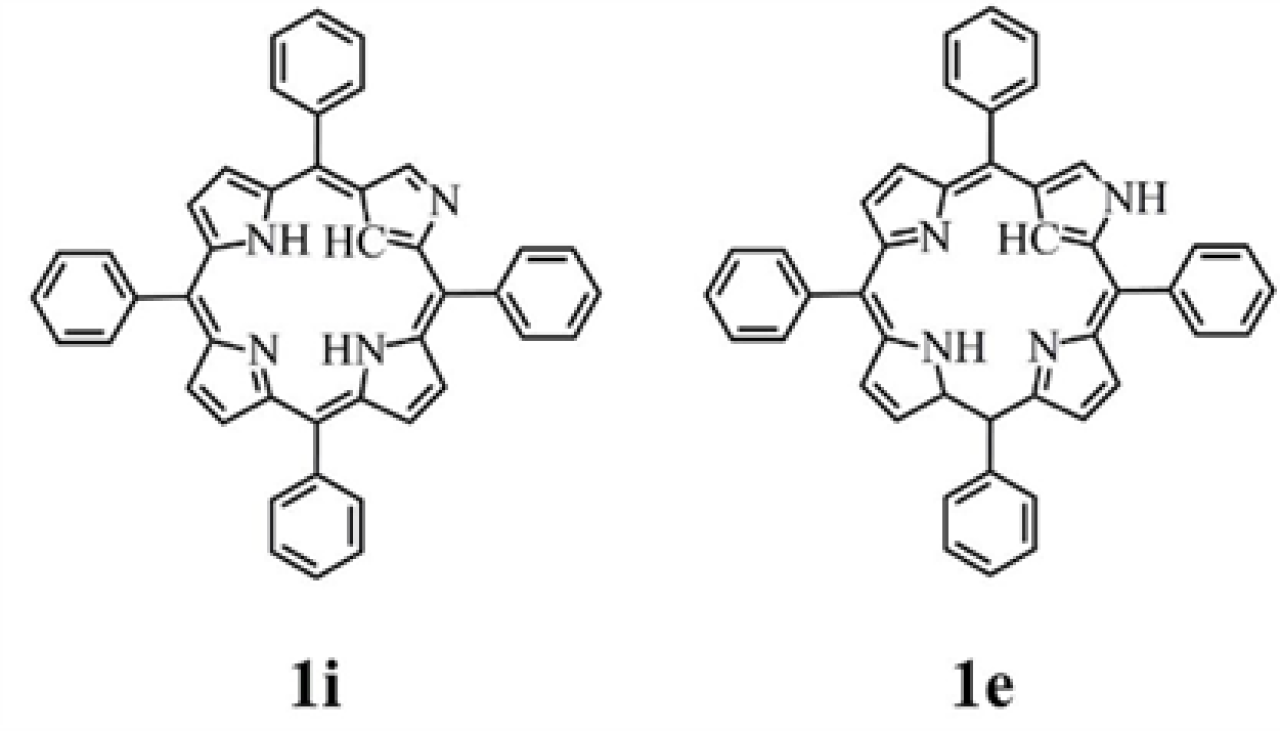
N-Confused tetraphenylporphyrins (NCTPP, 1) are now well-studied, differing from regular porphyrins by the inversion of one of the four pyrrole rings. Two tautomeric forms of NCTPP have been observed, one (1e) of which has an external N–H group and the other of which (1i) has two internal N–H groups (Scheme 1). The steady-state absorption spectra of the two NCTPP tautomers showed remarkable differences in both the Soret (S0 ® S2) and Q-band (S0 ® S1) transitions in various solvents. The tautomerization of NCTPP using absorption spectroscopy in fifteen different solvents was previously reported, revealing a strong correlation between the tautomer and the H-bond accepting ability of the solvent. Interestingly, steady-state absorption and emission spectra of NCTPP in alcoholic solvents were outliers and yielded spectra having a broad low-energy shoulder to the red of the Qy(0,0) band that was not observed in other solvents. Despite the relatively high polarity of the alcohol solvents, the absorption spectra of 1 in both solvents showed only the presence of 1i, the tautomer present in the non-polar cyclohexane. In this study, we report results from steady-state absorption and computational investigations examining hydrogen bonding interactions between methanol and NCTPP. We also explore how these interactions influence the absorption of spectra.
Scheme 1. Structures of tautomeric forms of N-confused tetraphenyl porphyrin 1i and 1e.
Faculty: Jojo Joseph, PhD
The Boyland-Sims oxidation reaction involves the transformation of arylamines and peroxydisulfate salt into o-aminophenols, predominantly yielding the ortho-substituted product, with the para isomer as a minor product. Traditionally, the mechanism is thought to proceed via nucleophilic attack of the amine on a peroxide oxygen, forming an arylhydroxylamine-O-sulfonate intermediate, which subsequently rearranges to the arylamine o-sulfate. However, this pathway has been questioned by Marjanović et al., who suggested that a nitrenium ion intermediate might be responsible for the reaction. In this study, we used high-level density functional theory (B3LYP/6-311++G**) calculations to identify the most energetically favorable pathways for the rearrangement of arylhydroxylamine-O-sulfonate to arylamine o-sulfate. We present relative energies of reaction intermediates corresponding to aromatic amines, including aniline, N, N-dimethyl aniline, and 4-ethyl-2-methyl aniline.
Faculty: Julie M. Hupp, PhD
This study investigates adult novel adjective learning subjected to congruent and incongruent gesture/prosody pairings. Prosody involves pitch, timing, and intensity of speech (Hupp et al., 2024). Gestures convey contextual, psychological, and linguistic information through physical movement (Gullberg & De Bot, 2010). Congruent gesture/prosody pairings are typical, but naturally conflicting pairings are evident in situations including sarcasm. Different combinations of prosodic/gestural stimuli were used to measure effects on word learning to determine which aspect dominates when they are incongruent. Adults (n = 101) were trained on 12 novel adjectives, half with congruent and half with incongruent gesture/prosody. Congruent trials have prosody and gesture with paired meanings (‘big’ gesture with ‘big’ prosody), while incongruent trials have conflicting gesture/prosody meanings (‘big’ gesture with ‘small’ prosody). Participants received three training blocks, including a video displaying gesture/prosody pairings training them on novel adjective meanings (this one is beevort). Participants received a 12-item implicit test after each training video, which presented two pictures demonstrating both dimensions of an adjective pairing (big ship versus small boat) and asked participants to identify which aligns with the trained meaning (which one is beevort?). Participants then completed an explicit task with 12 questions (6 yes 6 no; does beevort mean big?) to test their knowledge of explicit definitions. The dependent variable was percent answering based on prosody, which is a measure of word learning for the congruent trials, and measures how much participants rely on prosody for the incongruent trials. A one-sample t-test analyzed congruent trial means to measure word learning. Participants were not above 50% chance performance for Implicit Block 1, but by Implicit Block 2, they were above chance, t(71)=4.696, p<.001. A repeated measures ANOVA on the implicit tests found a Main effect of Congruency, F(1,71)=39.033, p<.001 and a significant Congruency x Test Block interaction, F(2,71)=25.564, p<.001. For congruent trials, a separate ANOVA was run to follow up with the significant interaction, and results showed a main effect of Test Block, F(2,71)=8.995, p<.001. Participants increased their accuracy over time on congruent trials demonstrating word learning. A separate ANOVA followed up on the interaction for the incongruent trials. There was a main effect of Test Block, F(2,71)=12.741, p<.001; participants increasingly used gestures over prosody across Blocks for incongruent trials. A repeated measures ANOVA on the explicit test showed a main effect of Congruency, F(1,71)=87.682, p<.001; participants answered based on gesture information for explicit definition questions on the incongruent trials. This research demonstrates adults attend to gestures over prosody during word learning, meaning that gestural cues are more important in word learning than prosodic cues. This may be due to participants relying on visual information more heavily than auditory information.
Faculty: Melissa Jungers, PhD, and Julie Hupp, PhD
Prosody is the tone, pitch, or speech rate that modifies the interpretation of words or phrases (Cutler et al., 1997). The current study examined implied motion’s effect on prosody production in children using a novel verb. Previous research shows that children and adults can comprehend and produce different rates of prosody of moving objects (Hupp & Jungers, 2013). Research also suggests people are faster at object recognition when images of objects implying a motion are paired with sentences describing the object with the same motion (fast speech with running horse; Shintel & Nusbaum, 2007). The current study extends research from adult participants, indicating prosody production is influenced by the implied motion of an image when using a novel verb to describe the action (Harrison et al., 2025). Preschool children (n = 31) participated in this study. The current experiment was adapted from an adult study for children as a computer game with the character “Maggie the Monkey.” Children were instructed to help Maggie collect bananas by describing images aloud using the novel verb daxing. Practice trials (n = 16) presenting an image implying motion were shown to participants. Participants were asked to describe the image aloud using a trained sentence structure that utilized the novel verb daxing to describe the implied motion (e.g., The pig is daxing to the kite). Test trials (n = 24) presented an image of a cartoon agent running or walking towards a target object. Two condition-blind researchers coded speech rate using Audacity. Coder 1 coded all participants, with coder 2 overlapping on 37.5% of participants (inter-rater reliability of 97%). A paired samples t-test revealed that 4-year-olds spoke slower when presented with a walking image (M = .413 sec/syllable, SD = .09) when compared to a running image (M = .393 sec/syllable, SD = .08), t (13) = 2.938, p = .006, while 5-year-olds did not vary their speech rate based on implied motion (p >.05). The implied motion of an image significantly affected 4-year-olds' speech rate when producing a novel verb but did not significantly affect 5-year-olds. The present study revealed that implied motion does affect the production of prosody in 4-year-olds. Five-year-olds did not produce sentences congruent in prosodic rate with the implied motion presented. This result highlights the unique trajectory of prosodic development in young children.
Faculty: James Wirth, PhD
How do individuals respond when a group member causing problems for the group decides to leave? Previous research (Wirth & Hales, 2025) found a group member’s leaving led to feeling of ostracism: worsened participants’ basic needs satisfaction (i.e., belonging, control, self-esteem, and meaningful existence), increased social pain (pain induced from a lost social connection), enhanced negative affect, and reduced closeness compared to a group member who stayed. But what if the group member who leaves is problematic? Prior research (Wirth & Wesselmann, 2025) concluded participants found burdensome group members to cause psychological pain. So, what happens to participants when a group member is burdensome and leaves the group? Might this be a good thing? We asked participants (N=419) to complete a personality questionnaire that matched them ostensibly to another participant with a similar personality (who were actually computer-controlled) to form their group. The group was told they would be completing a mathematical task. Then, participants wrote a short introduction describing themselves to the group and read their partner’s introduction. Their partner’s introduction said they are either good or bad at math (performance manipulation) and that they would either stay with or leave the group (leaving manipulation). Following the introduction, participants completed measures of basic need satisfaction, negative affect, social pain, closeness, burden, and manipulation check questions. We found when people worked with a group member, they had greater basic needs satisfaction, decreased feelings of ostracism, decreased levels of negative affect, and an increased feeling of closeness when the group member stays compared to when the group member leaves. When the group member left, participants felt less of the effects of ostracism when the group member was burdensome compared to being non-burdensome. Interestingly, though, the pattern reversed for two variables. When the participant’s group member stayed, participants felt their group member was more burdensome and felt more social pain with a burdensome versus non-burdensome group member. When the group member left, their burdensomeness did not significantly affect the outcomes. Our findings show when a group member leaves, we feel sad. But, if the group member who left is burdensome, we don’t feel as bad. Interestingly, we found that social pain and burden did not follow this trend, which implies burden may primarily influence social pain and may be more affected by a group member who stays. In future studies, participants could more evenly experience the burden manipulation and leaving. While ostracism was manipulated directly, participants were only told their group member would be burdensome. Later studies should manipulate both factors directly.
Faculty: Melissa Buelow, PhD
Engaging in decision-making often elicits an emotional response, as evidenced by increased activation in the amygdala and medial prefrontal cortex (Greene et al., 2001, 2004). These same regions are implicated in risky decision-making and risk-taking behavior, as well as in moral judgment and social cognition (Koenigs et al., 2007; Shenhav & Greene, 2014). Previous researchers examined how participants make moral/ethical decisions utilizing a series of scenarios or dilemmas (Gold et al., 2015). In these dilemmas, participants vary in their level of endorsement of harmful behaviors (Cushman et al., 2006; Greene et al., 2009; Hauser et al., 2007). During the COVID-19 pandemic, researchers noted significant changes in global and social structure that likely impacted what individuals considered to be right vs. wrong (Francis & McNabb, 2021). The present study assesses possible differences in how individuals respond to moral dilemmas pre- versus post-COVID. College student participant data was collected in two waves. Pre-COVID-19 data was collected in 2016 (n=188; ages 18-31; 54.5% female; 69.5% Caucasian) and post-COVID-19 data was collected in 2025 (n=287; ages 18-37; 65.5% female; 48.3% Caucasian). Participants responded to a series of moral dilemmas (Greene et al., 2001). Specifically, they indicated a) if they would engage in the behavior (yes/no) and b) how difficult it was to answer (1-10 scale). A series of independent-samples t-tests compared participant responses across time. Pre-COVID participants were more likely to decline to conduct several harmful behaviors than post-COVID participants (e.g., leaving an injured person on the side of the road; ps <.042); however, post-COVID participants were instead more likely to endorse using a deadly injection to develop a vaccine (p<.001). Significant differences emerged in decision-making difficulty on nearly all items, with 2016 participants endorsing greater difficulty than 2025 participants (ps <.05). We found that post-COVID participants reported less difficulty answering morally difficult questions than pre-COVID participants. In addition, the tendency to endorse engaging in a behavior in which someone is sacrificed to save multiple others was stronger in the post-COVID participants. Although this finding could be interpreted as post-COVID participants being more likely to endorse harming others, it could also be viewed as post-COVID participants finding it less difficult to decide to save many others versus an individual. Overall, these findings suggest that experiencing the COVID-19 pandemic may have affected how individuals interact with one another and make decisions that affect others.
Faculty: Susan Geffen, PhD, and Christopher W. Robinson, PhD
Many factors can influence the processing and integration of multisensory information. For example, semantic congruency can affect processing and integration of multisensory stimuli (Wright et al., 2003), with participants making faster category judgments if the multisensory information is semantically congruent (e.g., dog paired with barking) than incongruent (e.g., dog paired with meow). Studies examining the relative contributions of auditory and visual information in semantic congruency tasks have generally shown that visual stimuli contribute more than auditory stimuli, with congruent and incongruent visual stimuli having a larger effect on auditory processing than vice versa (Geffen et al., 2025). While these findings are consistent with visual dominance (Spence et al., 2012), they seem incompatible with mechanisms underlying auditory dominance, which suggests auditory stimuli may automatically engage attention (Robinson & Sloutsky, 2010). Forty undergraduate students completed a dual-modal N-2 working memory task that uses visual stimuli (cartoon-esque animal images) paired with auditory stimuli (animal sounds) to create bimodal trials. Participants were required to press the space bar when they detected a match to the stimulus from two trials prior and to make no response otherwise. Each trial lasted 1500 ms or until a keypress. Participants completed both the 'attend-to-auditory' (respond to what you hear) and 'attend-to-visual' (respond to what you see) conditions (counterbalanced order between participants). The N-2 task used stimuli presented as congruent, incongruent, and unimodal (sound/picture only) trials. The design featured 432 trials in the attend-to-auditory condition and 432 trials in the attend-to-visual condition, totaling 864 trials per participant. Response times (RTs) and accuracy were analyzed using a 3 (Congruency: Congruent, Incongruent, Unimodal) x 2 (Attended Modality: Auditory, Visual) repeated measures ANOVA. Auditory dominance effects may stem from auditory stimuli automatically engaging attention and delaying/disrupting visual processing (Robinson & Sloutsky, 2010); however, this is unlikely given that auditory stimuli have little effect on visual responding on semantic congruency tasks (Geffen et al., 2025). Thus, it is possible that auditory dominance, when found, may stem from auditory stimuli being prioritized or more salient in working memory, as opposed to disrupting visual encoding during initial perception (Robinson & Sloutsky, 2010). If auditory dominance effects stem from auditory items being easier to maintain/compare in memory, then adding a working memory demand should increase the relative effects of auditory stimuli on semantic congruency effects, while also providing additional insights into the dynamics of multisensory processing across a variety of tasks.
Faculty: Chris Robinson, PhD
Strong attentional control and high cognitive function are vital for successfully navigating a complex environment. Optimal cognitive performance is associated with a state of relaxed attention, facilitated by increased parasympathetic nervous system (PNS) activity and a healthy balance in the autonomic nervous system (ANS). Heart rate variability (HRV), the variation in time between heartbeats, is a measure directly related to ANS operation and PNS activation (Thayer et al., 2009; Sakakibara et al., 1994) and has been associated with enhanced cognitive performance. While long-term Heart Rate Variability Biofeedback (HRVB) training has demonstrated cognitive benefits (Sutarto et al., 2013), few studies have examined the short-term effects of a single session (Prinsloo et al., 2012; Bahameish & Stockman, 2024; You et al., 2021), and none have investigated effects on cross-modal processing. The current study builds upon the literature regarding a single HRVB session (Bahameish & Stockman, 2024) by employing an 8-minute, 6 breaths-per-minute guided breathing intervention while participants observe their live HRV data. Approximately 40 undergraduate students were randomly assigned to either the experimental (HRVB) or control (unmanipulated breathing) group. All participants completed a bimodal N-2 working memory task (Kirchner, 1958) across two separate days, counterbalancing an 'attend-to-auditory' and an 'attend-to-visual' condition. The N-2 task used animal stimuli presented as congruent, incongruent, and unimodal trials to assess complex attentional processing. The design featured 864 total trials, with 432 trials in the attended condition on Day 1 and 432 trials in the attended condition on Day 2. Response times (RTs) and accuracies were analyzed in order to assess cognitive performance. Physiological measures include HRV levels and respiration frequencies (MindWare Cardiograph) and pupil size/gaze fixations (EyeLink 1000 Plus remote eye tracker). It was hypothesized that the HRVB session would significantly improve HRV levels in the experimental group. This improvement in HRV was expected to persist for an additional 8 minutes post-intervention, whereupon the benefits may begin to fade, as this matches the length of the training. Supporting an improvement in executive function skills post-HRVB intervention, the experimental group was expected to show significantly greater accuracy scores and quicker response times on the N-2 task compared to the control group. Finally, the training group was expected to display smaller average pupil size during the N-2 task, reflecting enhanced cognitive functionality and greater PNS activation.
Faculty: Elizabeth Weiss, PhD
The aim of this qualitative substudy was to understand, compare, and contrast experiences with relationship dynamics and discrimination of bisexual and pansexual women. Fifty respondents filled out a Qualtrics survey detailing their sexual orientation, demographics, current relationship(s), ideal relationship(s), road to discovery, dating preferences, and other general personal information. In this study, both bisexual and pansexual women reported discrimination from the wider LGBTQ+ community. Multiple married bisexual women also reported a level of dissatisfaction with their relationship as it clashed with their ideal relationship structure. Multiple married pansexual women, by contrast, expressed some level of satisfaction with their relationship, often considering their existing relationship structure to be ideal. This presentation considers the potential implications of these findings and possible future research on the subject.
Faculty: Julie Hupp, PhD, and Melissa Jungers, PhD
The current study investigates the effect of pause placement on an individual’s sentence formation after being primed with a sentence using a specific pause structure. Individuals often persist or imitate speaking patterns previously heard, which includes speech rate and its impact on pause duration (Pardo et al., 2010; Yang, 2003). Pause duration helps indicate phrasal length as well as specific phrasal boundaries, specifically regarding speech naturalness (Lui et al., 2022; Yang, 2003). Pause duration and pause placement also act as cues to prosodic phrase boundaries and text organization (Šturm & Volín, 2023). This study analyzes pause placement as well as pause duration during sentence production to examine whether exposure to pauses impacts individuals’ persistence in similar pauses. Participants were recruited from introductory Psychology classes (n = 75). Participants were excluded from coding due to being a nonnative English speaker (n = 8) or not following directions (n = 2), leaving a total of 65 participants. There were three between-participant pause placement conditions, based on pause locations in the prime sentences: A, after the initial noun; B, within the verb phrase; and C, after the verb (e.g., The girl (A) is (B) drying (C) the dish). Participants completed five practice trials of the sentence structure without pauses and were instructed to practice this sentence structure formation (e.g. The girl is drying the dish). Participants then received 26 test trials, during which they listened to a spoken prime sentence that included a one-second-long pause according to their assigned pause placement condition (A, B, or C). Directly after listening to each prime sentence, they were asked to describe an image by producing a spoken sentence. Audio files were then coded by two condition-blind researchers to determine if length or placement of participants’ pauses are impacted by the primed pauses. The data has been analyzed with a chi-square test to determine if participants’ longest pause placement occurred at the primed location. It was predicted that participants would produce pauses in a similar nature to the prime sentence, with the length of the pauses being longest in the primed location. These findings provide additional understanding of how individuals persist in each other’s production of phrasal structure when communicating. Future research should examine whether the effect of pause placement and pause duration persists in young language learners.
Faculty: Melissa Jungers, PhD
Word learning is an important part of language acquisition. It is shaped by linguistic and cognitive factors that influence how people learn new vocabulary. Previous research has found that concrete words are acquired and processed more efficiently than abstract words, which may be attributed to their stronger sensory roots and ability to be learned through images (Mkrtychian et al., 2019; Richardson, 2003). Emotional valence also contributes to word learning, with emotionally charged words showing enhanced memorability compared to emotionally neutral words (Lana & Kuperman, 2023). Emotional prosody, specifically, adds extra meaning through tone and rhythm, shaping listeners’ interpretations and understanding (Shintel & Nusbaum, 2007). The present study integrates concreteness, emotion, and prosody to examine their combined influence on novel word learning in adults. An estimated 45 participants were recruited from Introductory Psychology classes. Each participant heard words spoken in three prosodic conditions: positive, negative, and neutral; with prosody as a within-subject variable. The specific word and prosody pairings were counterbalanced across participants, so each word appeared in only one prosody per participant. Participants learned 30 novel words paired with either concrete or abstract referents as definitions, for example, “Butib means car.” Prosody and word meanings were not semantically related. Following each of three identical learning phases, participants completed an explicit test to assess memory and accuracy. IRB approval was obtained, and a pilot study was completed to ensure that stimuli are clearly identified for prosodic emotion and concreteness. Data for the learning study was collected throughout the month of February and beginning of March. The complete data was analyzed with ANOVA. It was predicted that concrete words would be learned more accurately than abstract words, consistent with the concreteness effect. It was also expected that words with emotional prosody would be learned better than neutral words. These findings clarify how semantic concreteness and emotional prosody interact to shape vocabulary acquisition, which gives insight into the mechanisms underlying language learning. The integration of these variables extends current models of word learning by demonstrating that word acquisition depends not only on semantic and contextual information but also on affective and acoustic dimensions of speech. This furthers the understanding of how learners form new word representations.
Faculty: Melissa Jungers, PhD, and Julie Hupp, PhD
Prosody, or the way something is said, uses pitch or stress to add information about the meaning of a word. Using an auditory Stroop task, children, ages 4-5, were presented with adjectives in congruent (“happy” said in a positive tone) or incongruent prosody (“happy” said in a negative tone) and were instructed to focus on either word meaning or prosody to investigate their ability to attend to one dimension or the other. Current research has only examined adjective dimensions and prosody in adults, which produced inconsistent results (Browning et al., 2025; Filippi et al., 2017). This study expands on adult versions by investigating developmental differences. Preschool children (n = 29) were in one of four between-subjects conditions where they were trained to interpret words using prosody or word meaning. There were 24 training trials with corrective feedback (½ congruent, ½ incongruent) using Good/Bad contrasts (e.g., glad or upset). After training, participants continued through 24 test trials (½ congruent, ½ incongruent) with either Up/Down (e.g., tall or short) or Big/Small (e.g., giant or tiny) dimensions. To record responses, participants used two buttons in front of them that were placed over labeled cards with emojis corresponding to the dimensions. Accuracy and correct reaction time trials were analyzed using a mixed ANOVA, where congruency was a within-subjects measure, and condition (word meaning, prosody) was a between-subjects measure. The results showed that participants were faster, F (1, 26) = 7.00, p < .05, partial η2 = .21, and more accurate, F (1, 27) = 45.40, p < .05, partial η2 = .63, with congruent trials than incongruent trials. Participants were also more accurate on trials where they were instructed to focus on word meaning rather than prosody, F (1, 27) = 26.50, p < .05, partial η2 = .50. The gap in accuracy between prosody and word meaning on incongruent trials was significantly larger than on congruent trials, F (1, 27) = 57.08, p < .05, partial η2 = .68. These results indicate that 4- and 5-year-olds can recognize adjective dimensions when the prosody matches the word meaning. However, in the presence of incongruency, children rely on the meaning of the word rather than the prosody to decipher the intended meaning. This demonstrates that children lack the linguistic ability required to process incongruent prosodic information in relation to adjective dimensions.
Faculty: Chris W. Robinson, PhD
The "cocktail party effect" describes an individual’s ability to detect self-relevant information, such as one’s own name, when presented in a loud, crowded environment (Moray, 1959). This phenomenon works because humans are equipped with highly developed selective attention capacities; however, familiar or self-relevant information can capture one’s attention even from channels they are not consciously attending to. The present study aims to investigate the components of this attentional capture by examining whether individuals are more likely to detect a familiar English word in a stream of novel (nonsense) words or a novel word in a stream of familiar English words. This research addresses a fundamental debate in cognitive psychology: whether the human mind favors the processing of familiar stimuli due to lower activation thresholds (Bentin et al., 1995) or prioritizes novel stimuli as a survival mechanism for detecting environmental violations (Diliberto et al., 1998). Approximately 30 participants will be presented with a dichotic listening task in which they simultaneously hear two distinct audio files. To control for auditory variables, all stimuli in the ignored stream—both English and novel—will be consistently kept to two syllables. Through the attended ear, all participants will be tasked with shadowing (repeating) every word of a typical story as it is presented in order to keep their concentration on the primary task. The unattended ear will be assigned to one of two experimental conditions. The first condition presents a stream of common English nouns containing three two-syllable novel words embedded throughout the audio. The second condition presents a stream of novel words containing three embedded two-syllable English nouns. After the task, participant detection of the three embedded targets will be assessed using a recognition survey via Qualtrics. Past research has provided mixed results regarding these dynamics (Röer, J.P. & Cowan, N., 2020; Diliberto et al., 1998). Proponents of a "familiarity advantage" argue that attended words form memory traces that are more available to conscious recollection than unattended words. Alternatively, "mismatch theory" suggests that the top-down inhibition of familiar stimuli accentuates the processing of novel stimuli, causing them to "pop out" against a regular background. Based on the work of Diliberto, Altarriba, and Neill (1998), it is predicted that participants will be better at detecting novel words within a stream of English words as opposed to English words in a stream of novel words. This study provides critical insight into the cognitive dynamics underlying the cocktail party effect and offers a deeper understanding of the mechanisms governing unattended processing. Finally, this research could be extended to diverse, real-world languages to determine if these effects of novelty and familiarity carry over into natural linguistic environments.
Faculty: Elizabeth Weiss, PhD
This study explores how familial support, religion, and education shape the coming-out process and identity development of Bi+ and pansexual women. While existing research highlights the importance of supportive family systems (Katz-Wise et al., 2023), the impact of religious conflict on identity struggle (Fernandes et al., 2023; Lefevor et al., 2025), and the role of inclusive educational environments in fostering self-acceptance (Poteat et al., 2025), few studies have qualitatively examined how these intersecting contexts influence comfort and timing during the coming-out journey. The present project aims to deepen understanding of how these factors work together to support—or inhibit—sexual identity realization among Bi+ and Pansexual individuals. At this point in our research, we have all of the research data collected. I expect results that show a significant effect of the time frame in which participants came out as well as sexual identity with education, religion, and family support. Fifty participants identifying primarily as bisexual (n = 23) or pansexual (n = 18) were recruited through online posts and snowball sampling methods. Participants completed open-ended survey questions on Qualtrics regarding their family structure, religious background, education, age at realization, and experiences of community support. The qualitative analysis process involves iterative coding to identify central patterns and themes within participants’ written responses. At present, preliminary coding is underway, and initial readings of the data reveal recurring themes related to familial acceptance, religious conflict, and educational inclusivity. Preliminary analyses suggest that participants who reported strong family support and inclusive educational experiences tended to describe earlier and more positive identity realization. Conversely, those who experienced religious tension or lack of representation in their educational settings reported later self-disclosure, heightened self-doubt, and internalized stigma. These early trends appear consistent with prior research showing that affirming social contexts facilitate smoother coming-out processes (Etengoff & Daiute, 2014; Rosenkrantz et al., 2016). As the qualitative coding continues, we anticipate identifying how these influences interact to create distinct pathways toward self-acceptance for Bi+ and pansexual women. By emphasizing lived experience and contextual factors, this study aims to highlight the complex interplay between personal and societal influences on sexual identity formation. Findings are expected to inform clinicians, educators, and families about effective strategies for fostering acceptance and resilience in LGBTQ+ individuals. Overall, the project underscores the importance of supportive relationships and inclusive spaces in promoting healthy identity development within diverse sexual communities.
Faculty: Elizabeth Weiss, PhD
Parental communication about sexuality plays a crucial role in shaping children's sexual confidence, attitudes, and overall well-being as they transition into adulthood. The way parents approach discussions about sexuality, influenced by both parenting style and communication style, can either create healthy attitudes or add to uncertainty and misinformation. This study explores the connection between early parental discussions on sexuality and young adults' sexual confidence, attitudes, and well-being. Specifically, it explores how parenting style (authoritative, permissive, authoritarian, and neglectful) and parental communication style interact to influence these outcomes. Using a quantitative approach, this research gathers data from in-depth questionnaires with 100 undergraduate students at The Ohio State University. Participants' responses are analyzed using established frameworks, including the Sexual Confidence Scale, the Short Sexual Well-Being Scale, the Parental Authority Questionnaire, and the Brief Sexual Attitudes Scale. Statistical analyses, including ANOVA and correlation analyses, will be used to examine differences in sexual confidence, attitudes, and well-being across both parenting styles and communication styles. This study aims to identify patterns in how these factors influence young adults' sexual development. Our findings are expected to suggest that authoritative parenting, combined with open communication, is associated with higher sexual confidence and well-being. In contrast, authoritarian and neglectful parenting, particularly when paired with avoidant or restrictive communication styles, may correspond with lower sexual confidence and more negative attitudes toward sexuality. Understanding these connections can inform sex education programs and parental guidance strategies to promote healthier sexual development. This research strives to contribute to the existing literature on parental influence in sexual development, emphasizing the importance of both parenting style and the nature of communication in shaping young adults' sexual well-being.
Faculty: Christopher W. Robinson, PhD
People are always categorizing information in their daily environment, and the type of sensory input plays an important role in this process. Semantic congruency helps explain how information from different senses reinforces the processing of redundant information. For example, a dog paired with a barking sound is recognized faster than a dog paired with an irrelevant sound (Thomas et al., 2017). Previous research has discovered that visual information contributes more to categorization than sounds (Geffen et al, 2025), especially when the stimuli are familiar. However, less is known about the learning of novel categories. The proposed study will investigate how sensory modalities interact while learning novel categories. In order to find out more about how sensory modality can influence the learning of novel categories, we will test 60 Introduction to Psychology students who are randomly assigned to one of three conditions, (1) auditory-only, (2) visual-only, or (3) a mixture of auditory and visual. During the task, participants will be given a novel stimulus on each trial and must determine whether it belongs to a group of aliens called “Daxes” or “Feps”. The participants will see/hear four different Feps and four different Daxes on each block and each block will repeat 10 times for a total of 80 trials. Then, after each response, corrective feedback will be given so participants can gradually learn how to correctly categorize the aliens from the repeated trials. This will allow us to see how participants learn to categorize unfamiliar stimuli and see whether auditory, visual, or a combination of both inputs and see which one is most effective when learning novel categories. The participants’ performance will be measured by calculating the accuracy of every block of eight trials and tracking their learning progress over time. This progress will be compared to the other condition groups, and then the differences will be examined to see the difference in categorization accuracy between auditory, visual, and cross-modal groups. These comparisons will help determine whether or not categories are learned more efficiently through sound, sight, or a combination of both modalities when it comes to novel categories.
Faculty: Melissa Jungers, PhD, and Julie Hupp, PhD
Many objects have differing states, such as a balloon that can either be deflated or inflated, that are visually distinct. One’s visual representation of objects may change depending on its state. Visual representation may be specific to the context of previously introduced information, even when the information is implied. For example, object identification was faster and more accurate when a sentence implying the shape of an object matched the actual shape of the object (“There was a balloon in the air;” image of an inflated balloon; Hupp et al., 2020). Visual information gathered from gestures can be used to provide contextual information. Iconic gestures depict and provide literal information (Walther & Mittal, 2016). Iconic gestures have been shown to prime individuals’ responses in related target words, which yielded faster responses for related gesture-word pairings (e.g., target word: bird; gesture: pair of hands flapping) compared to unrelated pairs (e.g., target word: bird; gesture: drawing a square with both hands; Yap et al., 2010). Iconic gestures also increased word learning when compared to the use of nonsense or no gestures (Hupp & Gingras, 2016). The current study investigates the use of iconic gestures as a mechanism for implying the shape of an object using a sentence-picture verification task. Participants will be presented with neutral sentences about varying objects (e.g., “there was watermelon on the table”), followed by an image of a gesture implying the state of the object (e.g., whole or sliced watermelon). After the gesture is displayed, a line-drawn image of the object will appear. Images will match the state of the object implied by the gesture (e.g., whole watermelon gesture, whole watermelon image) or not match (e.g., whole watermelon gesture, watermelon slice image). Foil trials will be included that do not match the content of the sentence (e.g., image of a duck). Approximately 60 Introduction to Psychology course students will be instructed to respond based on the content of the initial sentence. If the image following the gesture matches the content of the initial sentence, participants will press the “yes” button. If the image is not mentioned in the initial sentence, participants will press the “no” button. Direct RT will be used to administer 6 practice trials with feedback and 88 randomized test trials. Response time and accuracy will be measured. It is predicted that adults will be faster and more accurate in recognizing content words when the state implied by the gesture matches the state of the following image. Results from this study will contribute to knowledge about how gestures activate perceptual information. Furthermore, it will provide a better understanding of how individuals incorporate gestural information into visual representation of objects with many states.
Faculty: Melissa Jungers, PhD, and Julie Hupp, PhD
Prosody is the use of pitch, loudness, and rate to modify the meaning of words (Cutler et al., 1997). The current study examines implied motion’s effect on children’s prosody production. Prior studies show that children and adults produce prosody at different rates depending on an object’s motion (e.g., fast speech to indicate fast motion; Hupp & Jungers, 2013). Research has shown that people are faster at recognizing objects when an image of an object with implied motion is paired with a sentence describing the object with the same motion (e.g., fast speech with a still image of a running horse; Shintel & Nusbaum, 2007). The current research extends results from a study indicating adults produced prosody that was congruent with the implied motion of a target when using a novel verb (i.e., daxing). A follow-up study with children found that 4-year-olds also produced congruent prosodic rates, whereas 5-year-olds did not significantly vary in their speech rate. To investigate this finding, the current experiment modifies the previous study by using a real verb. Prosody has an interesting developmental trajectory in that younger children frequently prioritize lexical information, such as word meaning, over prosodic information until about the preschool years (Moore et al., 1993). If 5-year-olds produce sentences congruent with the implied motion of an image while using a real verb, then the previous study results will be clarified. This finding will indicate 5-year-olds prioritizing lexical information (e.g., trying to determine novel word meanings from previous study), and that their production of prosody is hindered by this fact. Speech data will be collected from approximately 30 4- and 5-year-old participants. The current experiment will be a replication of the previous novel verb child study, using a real word instead of a novel word (Harrison et al., 2026). The experiment will be administered as a computer game featuring the character Maggie the Monkey. Participants will be instructed to help Maggie collect all her bananas by describing images aloud. Seven practice trials will provide participants with an audio training clip and ask them to describe an image of implied motion (e.g., the ball is going to the pin). After the practice, 24 test trials will present participants with images of a cartoon agent walking or running to a target object. Participants will be asked to describe images using a trained sentence structure that utilizes “going to.” It is predicted that the 4- and 5-year-olds will both produce prosody that is congruent to the image’s implied motion. Findings of the current study will clarify if 5-year-olds give preference to lexical information, which would explain their inability to produce information when presented with novel words. Results will emphasize the unique trajectory of prosody development in preschool children.
Advisor: Madeline Sharp
For my Second-year Transformational Experience Project (STEP), I partnered with the organization Big Brothers Big Sisters of Southeastern Ohio. Big Brothers Big Sisters (BBBS) is an organization that connects mentors (Bigs) with school-aged children (Littles) who are facing adversity. I completed my project in the summer and fall of 2024. Before the Littles started school in the fall, I went to the headquarters building to build match support boxes, find and put together activities, organize donations, and volunteer within their Nonprofit Book Nook. During the school year I met with two Littles in their school buildings once a week each for the entire fall semester. The school-based mentor program connects high-schoolers and adults with elementary- and middle-school students to meet once a week. In addition to the mentoring program, I prepared, organized, and collected donations for a donation drive for Big Brothers Big Sisters so that it can continue to support children in the community. I was able to collect donations based on the needs of the organization, including activities and crafts for the boxes they provided to the school-based matches. Outside of mentoring, I was also focused on advocating for the organization and the youth in my community. I visited my local high school and talked to the students about the importance and benefits of being a mentor and the need for Bigs within the area. I was also able to sit as a representative at my local fair, to talk to people in my community about BBBS and how to get involved. My project was transformational because it exposed me to real circumstances that affect the lives of children within my local community. I was able to hear first-hand from the children about the hardships they face. My commitment towards my future career was strengthened as I realized that I will continue to make a difference in the lives of children. I learned a lot about myself and the person I want to become. I was able to step outside of my comfort zone and experience new things that I might otherwise not have been able to. I experienced how the BBBS staff addressed the needs of the youths within Lancaster and other school systems. It was a privilege to be a part of something that brightens a child’s day and that creates strong connections within my community. Pushing myself and being an advocate for the organization was a huge transformation. I spoke in front of people and gave presentations, utilizing my BBBS experience to spread awareness to the need for mentors.
Faculty: Michael Stamatikos, PhD
In the hustle of everyday life, work, education, and other obligations, we tend to forget the big picture. That is, the bigger picture of our reality and of life itself. We are on but a tiny planet in the vast universe. “On it everyone you love, everyone you know, everyone you ever heard of, every human being who ever was, lived out their lives,” said Carl Sagan of the planet. I am extremely inspired by Sagan’s words, and I use them to ground myself within the bigger picture. This inspiration led me to Astrophotography. Astrophotography has allowed me to invite creativity into observation. The John Glenn Astronomy park has become my home. My mission is to remind people of the vastness, beauty, and never-ending wonder of our universe. Science is not just for scientists, it is for all of humanity! I use the SeeStarS50 camera to capture all of my images and I use Adobe Light Room to edit these pictures. The great thing about these telescopes is they work well even in heavily light-polluted areas. I have taken images in the heart of downtown Columbus that are absolutely fantastic. To take these images, I take long 10s-30s exposures and stack them. Some targets take longer than others to image, so I can spend anywhere from twenty minutes to ten hours taking exposures. Some objects I have imaged are the Triangulum Galaxy (M33), the Andromeda Galaxy (M31), the Horsehead Nebula (IC434), the Orion Nebula (M42) and the Pleiades star cluster (M45). The final products are images of beautiful nebulae, galaxies and star clusters. Each time I see the finished product, I feel that all the time, energy, and effort was worth it. When I finish an image, I find a song that represents the image. All together, the project creates a feeling of wonder and awe. This tiny little camera can bring out the beauty hiding beyond what the eyes can perceive. The artistic importance of my work is to inspire curiosity. We are all born with immense curiosity, for it is what has gotten us where we are today. My goal is to bring back people's child-like sense of wonder and to let others know, no matter what field you are in, no matter what your life looks like, no matter your situation, you too can be involved in science and the quest for knowledge. My biggest goal is to show others the beauty of our universe and of life itself, and to treat our planet with kindness, for there is only one Earth, one life, and one universe.
Advisor: MaLisa Spring
Students often need jobs on campus but hesitate in applying for one on-campus job: the Chemistry lab assistant. I applied and was hired for this role and want to explain what it takes to become a Chemistry lab assistant and what the job entails. For starters, you need to have some sort of science experience, but high school classes can count. Before working in the lab, I first had to complete online and in-person trainings. I got paid to complete these trainings, which included information on OSHA lab standards, building emergency action plans, and cryogenic liquids. During the in-person training, we were given an idea of what was expected of us on the job and what tasks we could be doing. I found this training to be quite complex but necessary. Once in the lab, tasks vary by instructor and lab. Chemistry lab assistants check drawers before lab starts to make sure they have appropriate materials. We also help with checking in and making sure students are wearing appropriate clothes. I must evaluate students for compliance and assist the instructor with maintaining a safe learning environment. During slower labs, I did tasks like setting or putting away equipment, cleaning equipment, or transporting equipment from storage. We can also be asked to assist with regular maintenance of equipment and conduct diagnostic monitoring. One of the things I liked about this job is the weird tasks that are assigned. One day, I was asked to do a craft project of creating and laminating cards to read burets. Another day, I was asked to use a hammer to shatter candies and then rewrap them for an upcoming experiment. Overall, I would recommend this job for students looking to put STEM-related job experiences on their resume.
Faculty: Virginia H. Cope, PhD
My presentation reflects on my entire summer internship experience that provided me
with experiential learning in the clinical side of sports medicine as well as the public health side. My internship was completed at the Cleveland Clinic Sports Medicine Center under the mentorship of a Dr. Sami Rifat, as well as at MetroHealth’s Food as Medicine program under the guidance of Mrs. Asya Aretskin-Hariton. The purpose of my experience was to gain firsthand insight into the practice of sports medicine while also connecting with public health initiatives that address social determinants of health within the community of Cleveland, Ohio. During my clinical rotations, I was able to observe patient consultations and various diagnostic procedures that occurred within the clinic. While shadowing Dr. Rifat, I gained insight into the process physicians use to evaluate patient injuries. The various “musts” I retained include knowing how to review medical records, collect subjective patient information and analyze diagnostic imaging. Observing these doctor-patient interactions allowed me to understand the structured approach that physicians use to diagnose musculoskeletal injuries and provide the best treatment plan possible. In addition to the technical aspects of patient care, I was also able to oversee the interpersonal skills required to build trust with patients. Dr. Rifat heavily emphasized the importance of communication and trust in the medical field, as without it “there is no solution.” My public health rotations took place at MetroHealth’s Food as Medicine program. During my experience, I was asked to organize medically prescribed deliveries, restock food supplies, and interact with patients who rely on the program for access to nutritious food. This experience taught me that socioeconomic factors that people have no control over can significantly influence health outcomes. Being able to be hands-on and assist with patients who are facing food insecurity as well as other barriers and hardships (financial burdens, limited transportation, etc.) demonstrated that healthcare extends beyond clinical treatment. Both experiences were valuable, but I would certainly say the public health component had the most significant impact on me. After my experience, I came to realize the importance of building meaningful relationships with patients—recognizing that the human aspects of healthcare is the foundation to effective treatment. The absence of a strong doctor-patient relationship is the root to a failed recovery; without it, the patient would never develop the trust necessary to follow a recovery plan and successfully improve their health. Overall, this internship impacted my perspective on healthcare by highlighting how the roles of clinical medicine and community health are immensely interconnected. This experience strengthened my interest in pursuing a career in sports medicine while reminding me that effective healthcare requires both the scientific knowledge gained through med-school, and genuine human connection.
Advisor: Ashley Moore
Experimental and hands-on learning opportunities allow students to apply knowledge to real-world experiences and engage more deeply with their peers. The incorporation of various field experiences along with collaboration can greatly enhance student engagement and personal development. Many such opportunities arose during an overnight educational trip to The Ohio State University Stone Laboratory on Lake Erie. This experience brought together students from a variety of academic majors, backgrounds, and interests to participate in hands-on activities and discussions focusing on biological studies. During the trip, students explored the island’s ecosystem by observing various wildlife and assisting in gathering data to be used in future reports for the Lab. Activities included measuring wave patterns, water depth, and transparency, and collecting microorganisms from Lake Erie. Each of these tasks required collaboration, allowing students to share ideas with their peers while learning through direct contact with the environment. Each person brought different ideas and perspectives to the activities, encouraging discussion and problem-solving. This teamwork fostered a sense of community and engagement that carried into the on-site classroom sessions. We looked at samples under microscopes, learned anatomical terminology, and even participated in a fish dissection together. Activities like this also helped bridge the gap between classroom learning and real-world application. Concepts that might normally feel abstract became easier to understand when observed directly in their natural environment. Connecting scientific ideas to real living things made the learning process far more engaging and memorable. Observing and handling organisms first-hand provided a greater appreciation for the complexity of nature around us and how humans play a role in impacting these environments. Such experiences can also encourage students to think differently about their education. By stepping outside of the traditional classroom setting, students can explore their curiosity and engagement with the natural world. Overall, the Stone Laboratory experience highlights how hands-on learning can benefit students’ academic and personal growth. Whether it is through using nets to find aquatic worms, discovering snakes around the island, or catching fish right off the boat, experiences like these shape how we view our education and what we can gain from it. They demonstrate the value of academic enrichment activities in expanding learning beyond the classroom. Even students who did not initially have a strong interest in biological studies left with meaningful experiences and new perspectives. Shared discoveries helped bring the group together in new ways. We were able to deepen our understanding while also building connections with staff members and other students. Using the skills explored at Stone Laboratory, we as students can change our trajectories and make a difference by pursuing further courses in environmental learning or leadership roles within campus organizations.
Faculty: Macy Ward, PhD
OSU Newark's Engineering club, THEETA, is constructing a trebuchet. The design and construction process are student-led and directed. This presentation documents the design and construction process, as well as the results and capabilities of the current work-in-progress trebuchet. Through this presentation, we hope to tell a compelling visual story documenting the design, construction, and results of this process.